A Guide to the Good Life
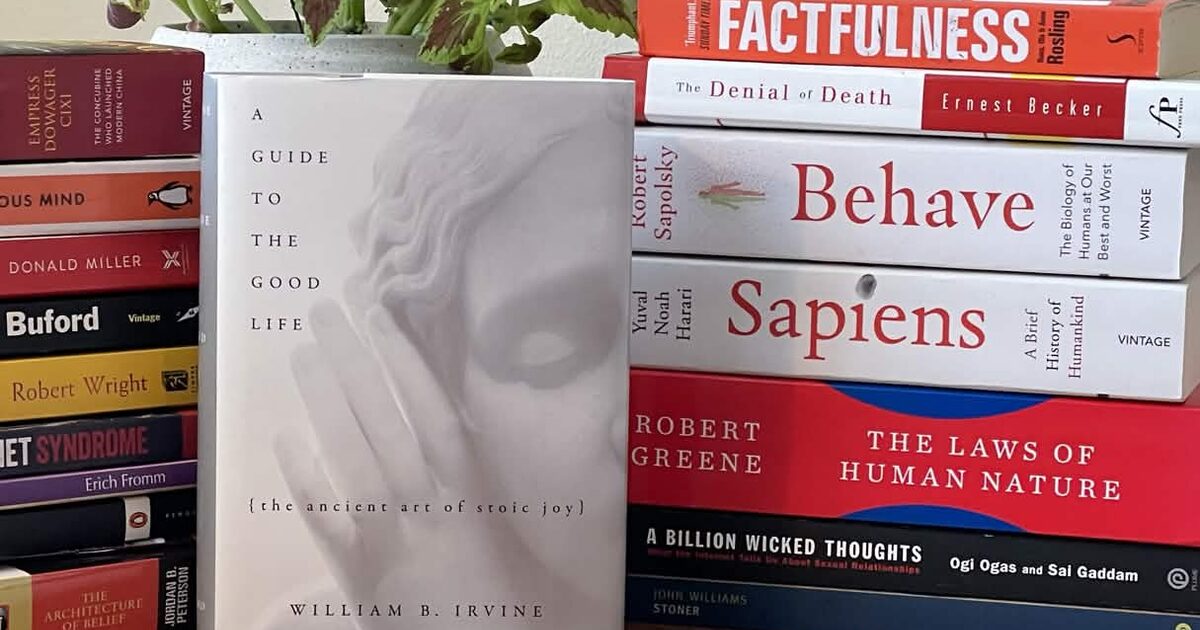
Few books have impacted my life to the same degree as A Guide to the Good Life. It takes Stoic philosophy and translates it into practical tips for how to improve your overall psychological well-being. I discovered this book early in my reading career and it introduced me to both Stoicism and the art of living. I actually see a clear divide between who I was before vs. after reading this book.
Adopting the Stoic ideas from this book resulted in:
- −95% road rage
- +45% gratitude
- −30% gossip & judgement
- +50% insult immunity
- +75% practice of Voluntary Discomfort
- +100% more philosophy books in my reading list
Hedonic Adaptation
Imagine you get the "thing" you desired for a long time. The following weeks and months the newness of it starts to fade. With enough time the initial appreciation is gone.
This is Hedonic Adaptation. After working hard to get what we want, you quickly lose interest in what you worked so hard to attain. This book was the first to introduce me to some interesting Stoic countermeasures for combating hedonic adaptation: Negative Visualization and Voluntary Discomfort.
Negative Visualization
Make a habit of imagining, as vividly as possible, the loss of possessions and loved ones. This will help you appreciate things and people more fully. This might sound macabre, but let's face it — nothing is forever, no one is immortal.
Voluntary Discomfort
Practice depriving yourself of what you have to appreciate its real value. Build resilience and toughen up beforehand for occasions of misfortune.
- Sleep on the floor
- Don't drink for a day
- Underdress for cold weather
- Read comment sections online to elicit anger and practice equanimity
- Emulate poverty by dressing in shabby clothes
- Turn down wine when offered (even in pandemics & war 😉)
⭐️ Takeaway
If you don't have a philosophy of life, or are in the process of uncovering the principles on which to build your life, then this book is a must-read. It's an exceptionally practical book and the author has done a great job at translating ancient Stoic ideas and practices into tools that can be used in a modern context and your everyday life.
This is the 5th time I read this book. Sure, it has repetitive parts, but it holds up each time. It earned its place on the Great Books list.
⚖️ Verdict
The single best introduction to Stoic philosophy for the modern reader. Irvine doesn't just explain what the Stoics believed — he shows you how to use their techniques today. Negative visualization, voluntary discomfort, the trichotomy of control — these aren't abstract concepts here, they're practical tools. If you're looking for a philosophy of life and don't know where to start, start here.